
A long one!
A little over a million people took to the streets Tuesday in the sixth and largest such demonstration this year. I had a little time before work, so I walked along the edge of the crowd to take it all in. It wasn’t like I could avoid it, really; I live a block away from the main boulevard of the city, and that’s where people were marching. I could hear them when I opened my window, and smell the acrid burning of the fireworks and smoke bombs.
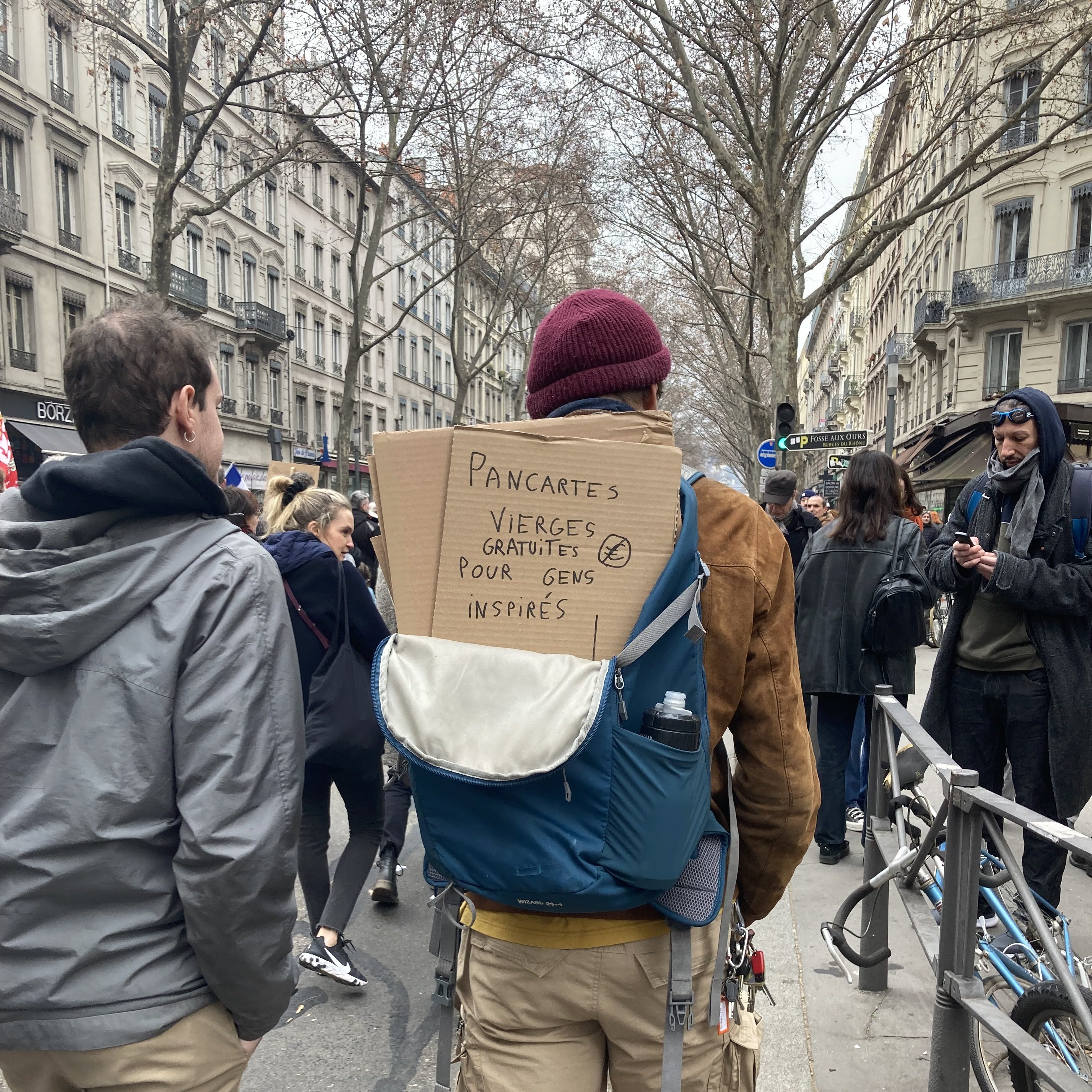
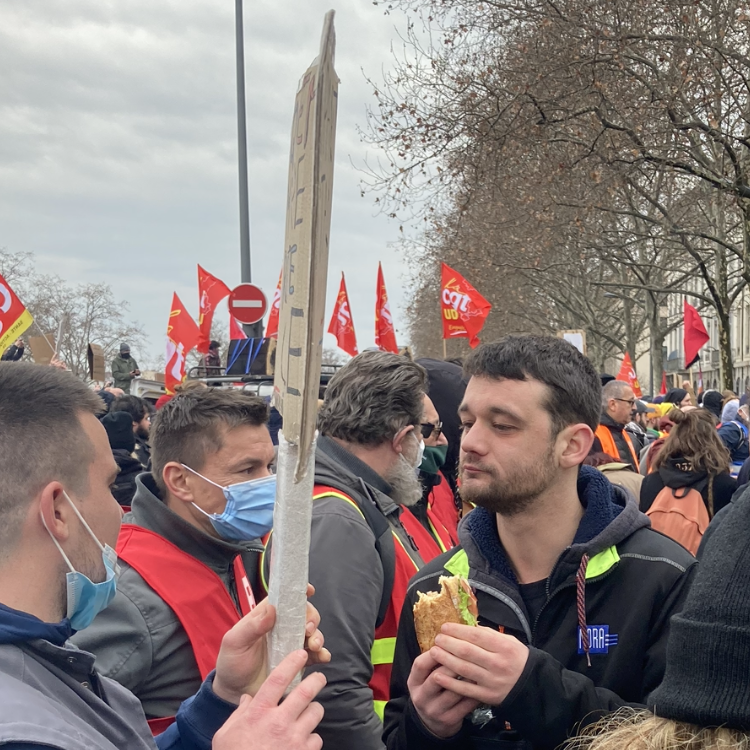
The variety of the crowd was astounding. Old ladies shuffled along next to punks with face tats. People brought their dogs to walk, and I saw several strollers. Plenty of parents put their kids on their shoulders so they could see everything. The university students had their bloc right behind one of the bigger rail unions, who had formed a protective unit by locking arms.
The crowd shared resources; blank sheets of cardboard were passed around along with Sharpies. Vendors were set up on the sidewalk hawking banners and placards. I saw a couple people pass around beers (it was 3pm). I didn’t realize until later that the idea was to drink the beer, then chuck the empty container at the gendarmerie.
Stationed at intervals throughout the crowd were organizers with speaker systems on wheels, sometimes even in slow-moving vehicles. They initiated chants and songs, and reminded people what they were there for. I heard “revolution” a lot.
I was walking faster than the crowd, and eventually found myself at the front. That’s where I found the black bloc. These guys place themselves at the front to act as a sort of battering ram to push the march through the police wall. But why push through? Why not just stand where they are, and avoid violence? I’ll tell you why.
Lyon, like every city in France, has a main square that in historically used for two things: farmer’s markets, and mass uprisings. This would be the location where the Revolutionaries (the original ones) would gather to behead the nobility. Nearly every protest either begins or ends in these landmarks as a callback to the history of protest in the country — organizers are attempting to draw a clear line from 1789 to now.
In Lyon, this main square is called Bellecour, and it is located on an island in the middle of the city. To get there, the thousands of protesters had to all cross the same bridge, which by the time we arrived, was thoroughly barricaded by dozens of gendarmes in riot gear. Everyone knew that getting to Bellecour would be a major victory for the protest, and also an incredibly dangerous scenario. Bellecour is a flat, empty expanse blocked in on all sides by tall buildings. If the entire crowd managed to get there, not only would they be fish in a barrel for the police’s teargas and firehoses, they would also be at extreme risk for stampedes. Incredible violence would occur simply by people attempting to escape.
The protesters never made it en masse to Bellecour, although several groups broke off to try different bridges and modes of entry. Nobody in Lyon was seriously injured. I heard somebody got burned badly in Paris, but that’s no surprise. Things always pop off in Paris.
Below you’ll find some photos and videos I took at the protest. Nobody gets hurt or anything, but some of the clips are a little tense, so if you’re not into that sort of thing, you can go ahead and scroll to the bottom.
I left after taking that video of the sidewalk chunk throwing. Things were getting a little too hot for this American. No harm came to me or anyone around me, just as a reminder. People were soaked and knocked down by the water, but that was the extent of it.
Bises,
Allison
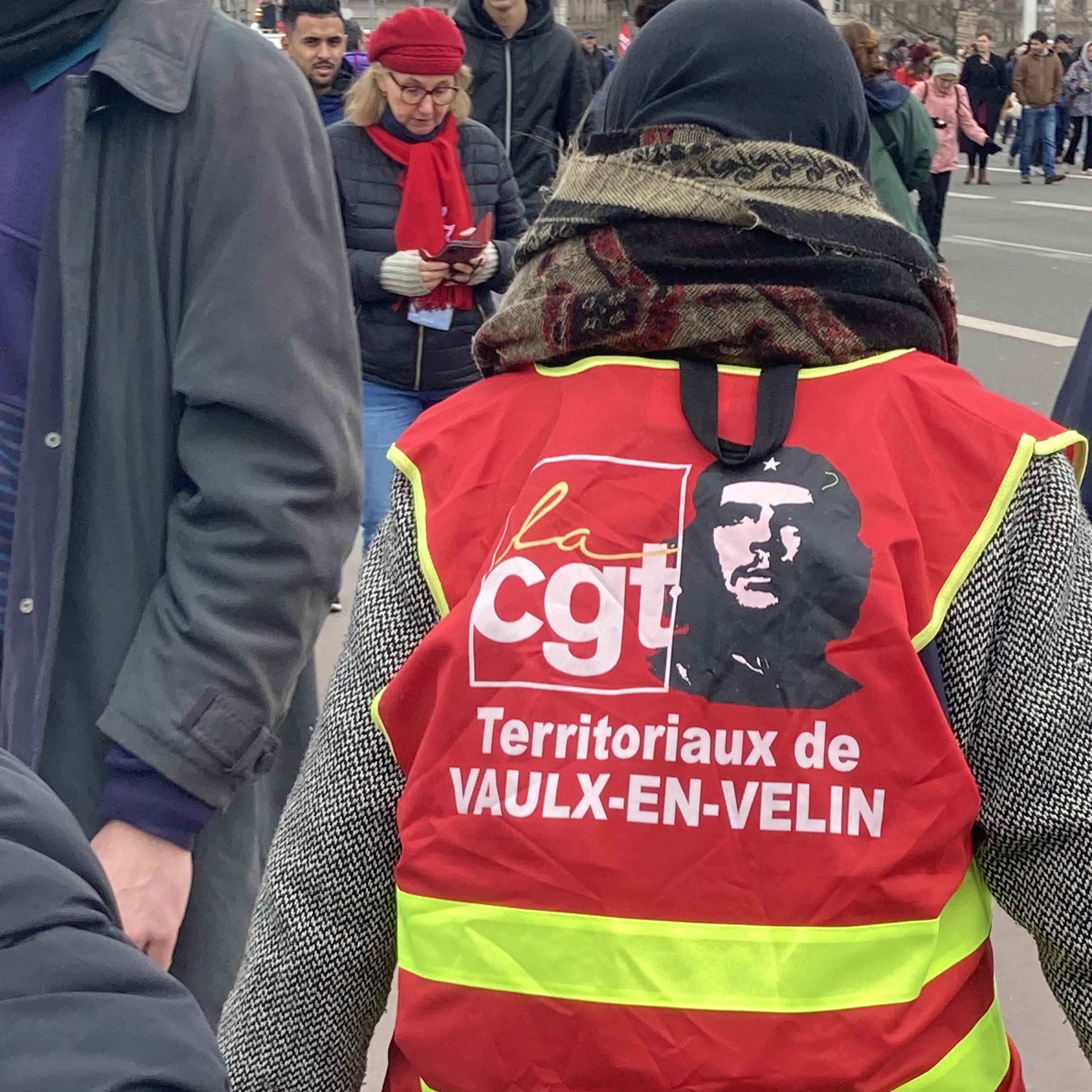
P.S.: I’d love to hear your reactions to these images, especially the Che Guevara trade union vest. How well would any of this fly in the States?
 Flan in France